

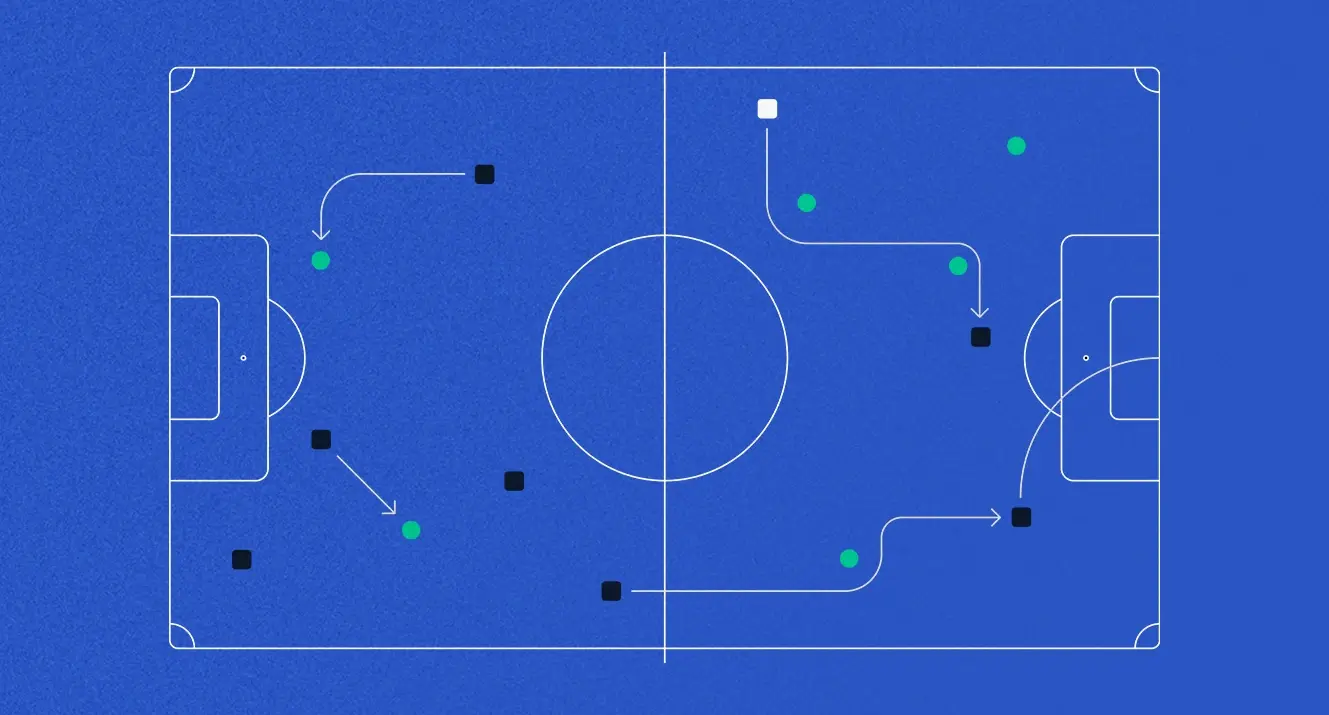
No team lifts the World Cup by reading the playbook once and hoping. They drill the same set-piece a thousand times so that, under the brightest lights, execution is automatic. Disaster recovery testing is exactly that discipline applied to financial services - and the banks that treat it as optional are the ones improvising when it matters most. If your IT disaster recovery plan lives in a binder or a stale spreadsheet, you don't have a capability. You have a theory. (For the fundamentals, start with our guide to IT disaster recovery testing.)
What is disaster recovery testing?
Disaster recovery testing is the practice of rehearsing your recovery plans, specifically, failovers, restores, and coordinated team actions under realistic conditions to prove your systems and people can bring critical services back within target timeframes. It validates two things at once: that the technology recovers, and that the humans running it know exactly what to do.
A plan that has never been executed is unproven. DR testing turns assumptions into evidence measured, timed, and auditable.
Why untested DR plans fail financial institutions
For financial services, downtime isn't disruptive. It's existential. Every minute carries financial, reputational, and regulatory weight. For 44% of enterprises, the hourly cost of an IT outage runs between $1 million and over $5 million.
Yet the plans meant to protect against that cost are often the weakest link:
- They go stale. Legacy DR plans rely on data that drifts out of date the moment it's written. Across thousands of applications, the gap between "documented" and "reality" widens every week.
- They're never rehearsed at scale. Coordinating dozens of teams through a live recovery is a skill. Skills decay without practice.
- They can't be verified. When Recovery Time Actuals (RTAs) are logged manually days after the fact, regulators, and you, have no way to trust the numbers.
The result is a false sense of safety. The plan looks complete. Then a regional cloud outage, a cyber event, or a data center failure hits, and the improvisation begins.
The World Cup lesson: preparation beats talent under pressure
Elite footballers are not defined by what they do when everything goes to plan. They're defined by what they do when the pressure is highest and there's no time to think.
That composure isn't talent. It's rehearsal.
The best sides run the same movements until they become muscle memory. They scrimmage against real opposition, not cones. They review the tape after every session and sharpen the weak points. By the time the final arrives, the moment feels familiar because they've already lived it, hundreds of times.
Your recovery teams need the same reps.
Disaster recovery testing is your training ground. Run the drills often, against realistic scenarios, and your people build the reflexes to execute under fire. Skip practice, and match day becomes the first time your squad has ever played together. In financial services, match day is a live outage in front of regulators, customers, and the market. That is not the moment to discover your plan doesn't work.
What disaster recovery testing looks like when it works
Great teams don't just practice more, they practice smarter, with a clear view of every movement and a record they can learn from. The same is true for IT disaster recovery at enterprise scale.
Cutover replaces static plans and conference-call chaos with orchestrated, automated runbooks that turn recovery testing from a quarterly ordeal into a repeatable, measurable discipline. Teams rehearse, benchmark against previous runs, and improve every single time - with an immutable audit trail generated automatically as a byproduct of execution.
The outcomes at the world's largest financial institutions speak for themselves:
- ~53% faster recovery. A global asset manager cut average application failover from 4 hours to just 38 minutes using automated runbooks.
- 70% less DR planning time. An American investment bank managing 2,000 applications a year pulled thousands of recovery plans into test scenarios in minutes, executing 143,000 tasks across 10,000 users.
- 65% faster recovery execution. A financial services firm reduced execution and verification time by two-thirds and cut post-event reporting from 3–4 hours to 5–10 minutes.
- 12 weeks to 2. A British multinational bank compressed its recovery testing cycle for 5,000 services from twelve weeks down to two.
- A 48-hour enterprise simulation at one FSI ran 1,000+ recovery plans and 16,000+ tasks, recovering over 1,000 applications — reaching a level of maturity in 16 months that typically takes years.
That's what "trained" looks like.
Disaster recovery testing and regulatory compliance (DORA, FCA, SEC)
Regulators no longer accept a documented plan as proof of resilience. Frameworks like DORA, the FCA/PRA, and the SEC increasingly demand evidence that you have tested your ability to recover with verifiable timings and a clear audit record.
Manual, after-the-fact reporting won't survive that scrutiny. Disaster recovery testing that captures every step, person, and timestamp in real time does. It turns compliance from a reconstruction exercise into a one-click export and turns your regulator from an adversary into an audience watching a well-drilled team perform.
Frequently Asked Questions
How often should FSIs perform disaster recovery testing? Best practice is continuous rather than annual. Leading banks now run recovery and failover tests weekly or per release, treating testing as ongoing practice rather than a once-a-year event — because resilience, like fitness, decays without regular reps.
What's the difference between a DR plan and DR testing? A DR plan documents how you intend to recover. DR testing proves whether that plan actually works under realistic conditions. The plan is the playbook; testing is the practice that makes it real.
What is the biggest risk of not testing a disaster recovery plan? An unverified plan creates false confidence. When a real outage hits, untested assumptions fail silently, recovery times blow past targets, and regulators find no credible evidence of resilience.
How does disaster recovery testing support DORA compliance? DORA requires financial entities to test their operational resilience and evidence it. Orchestrated testing with an automated, immutable audit trail provides the verifiable timings and records regulators expect.
Can DR testing be automated at enterprise scale? Yes. Automated runbooks let FSIs pull thousands of recovery plans into test scenarios in minutes, coordinate large global teams, and benchmark performance run over run — making frequent, large-scale testing practical.
Champions rehearse. So should your recovery teams.
Greatness on the pitch is built on the training ground — long before the final whistle. Enterprise resilience works the same way. The banks that recover fastest aren't the ones with the thickest binders. They're the ones who practiced.
Stop hoping your DR plan works. Prove it.
See it for yourself: Book a demo — or explore Cutover for IT disaster recovery.